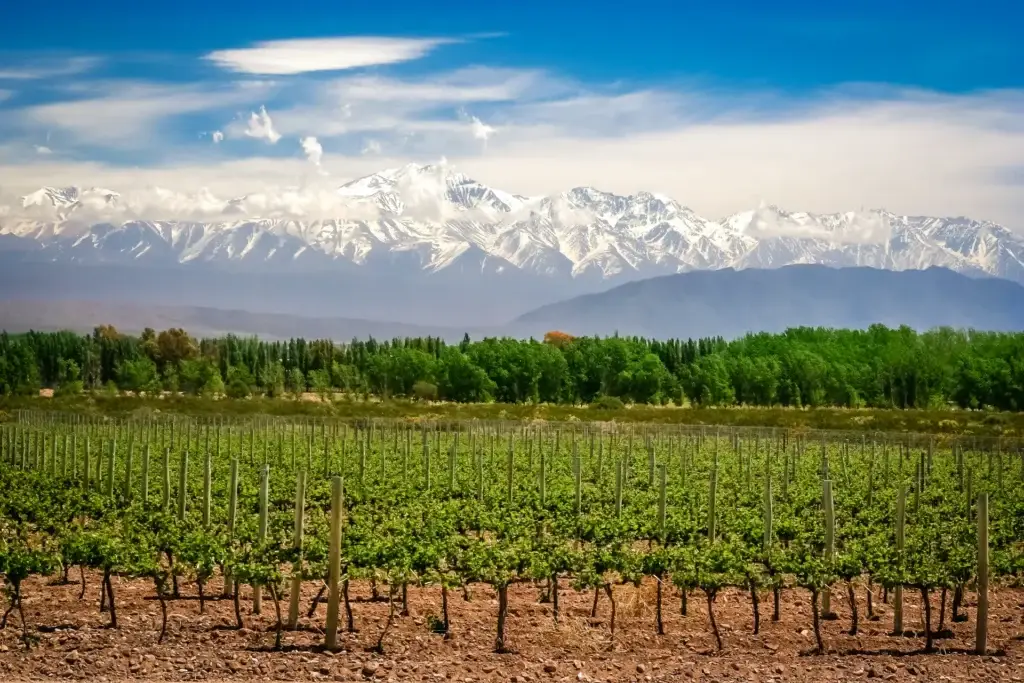
Carmenère and Cabernet Sauvignon are the two most widely planted red grape varieties in Chile. They share valleys, microclimates, and even blend together harmoniously in many of the country’s top labels. At first glance, both might be described as “bold Chilean reds.” However, their true differences lie in distinct technical characteristics: aromatic profile, tannin structure, optimal terroir, and aging potential.
Article Contents
- Origin: One renowned classic, one confused for over a century
- Differences in color and aroma
- Structure: Tannins, body, and finish
- Where each variety expresses itself best
- Serving temperature and aging potential
- How to distinguish them in a blind tasting
- Food pairing: Which grape performs best per dish
- Why Chilean blends frequently combine both
Origin: A Renowned Classic vs. A Century-Long Confusion
Cabernet Sauvignon arrived in Chile in the mid-19th century and was recognized immediately. It became the cornerstone of Chile’s early wine exports and remains the country’s most widely planted grape. (See our complete Cabernet Sauvignon guide.)
Carmenère arrived in that exact same 19th-century wave, but was inadvertently interplanted with Merlot. For more than a century, Chilean winegrowers and consumers savored Carmenère convinced it was Merlot due to visual and ripening similarities. Only in 1994 did French ampelographer Jean-Michel Boursiquot identify the true botanical differences. Today, Chile is by far the world’s preeminent producer of Carmenère. (Full story in our guide to Carmenère.)
Differences in Color and Aroma
Cabernet Sauvignon: Brilliant ruby red turning to garnet with cellar age. Aromas lead with blackcurrant (cassis), blackberries, and dark plums; green bell pepper notes appear in cooler vintages, evolving into cedar, tobacco, and cocoa with oak aging.
Carmenère: Deeper crimson-purple robe. Aromas feature ripe cherries and juicy black plums, characterized by its signature note of roasted red bell pepper, savory spices, cocoa powder, and dark chocolate.
The clearest sensory distinction on the nose: crisp green bell pepper hints at Cabernet Sauvignon, while sweet roasted red pepper or gentle baking spice points unmistakably to Carmenère.
Structure: Tannins, Body, and Finish
Cabernet Sauvignon possesses firmer, more structured tannins and an enduring finish that can feel assertive or chalky in youthful wines without decanting. Carmenère presents rounder, silkier tannins from day one, slightly softer body, and a warm, spiced tail.
On an intensity scale of 1 to 10 for tannin presence, youthful Cabernet Sauvignon generally rates between 7 and 8, while youthful Carmenère sits between 5 and 6. This explains why Carmenère drinks wonderfully without prolonged cellaring, whereas high-tier Cabernet Sauvignon flourishes after 3 to 5 years in bottle.
Where Each Variety Expresses Itself Best
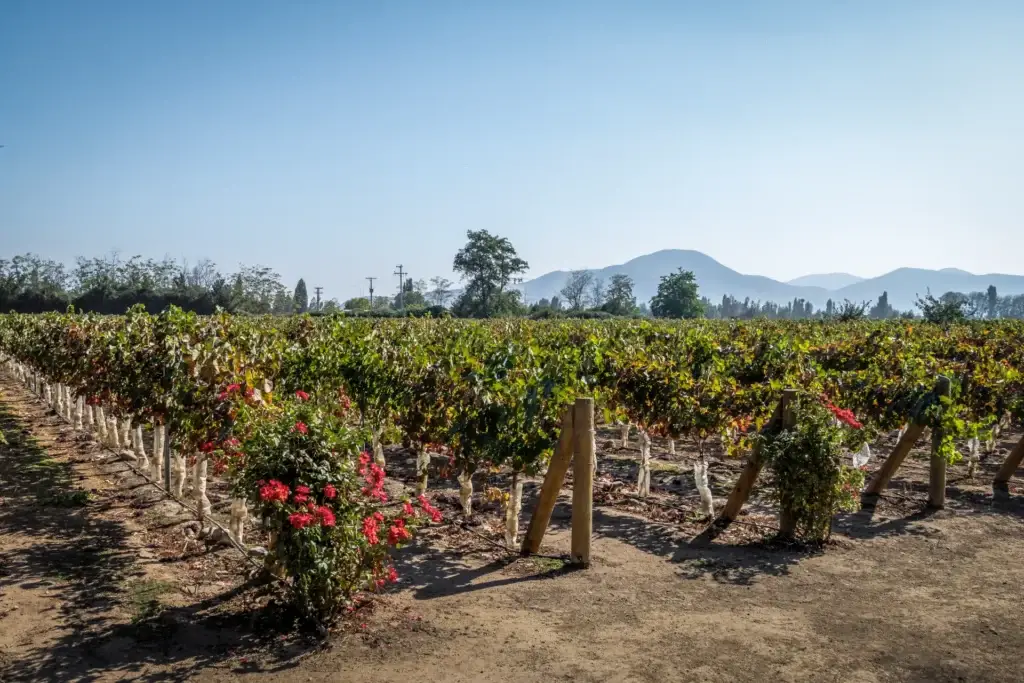
Cabernet Sauvignon reaches its summit in Alto Maipo, where rocky alluvial terraces and mountain temperature swings force roots deep into the ground, yielding highly concentrated fruit and aristocratic structure.
Carmenère thrives in the warm, sun-drenched microclimates of Colchagua (especially Apalta) and Cachapoal (Peumo), where long, dry autumns allow the variety to fully mature its tannins without vegetative harshness.
Serving Temperature & Aging Potential
| Attribute | Cabernet Sauvignon | Carmenère |
|---|---|---|
| Serving Temperature | 16-18°C (60-64°F) | 16-18°C (60-64°F) |
| Cellaring (Mid-Range) | 2-5 years | 1-3 years |
| Cellaring (Icon / Premium) | 8-15+ years | 5-10 years |
| Decanting Recommended | 60-90 min (youthful reserves) | 30-45 min |
Food Pairing: What to Match with Each Grape
| Dish | Best Choice | Why |
|---|---|---|
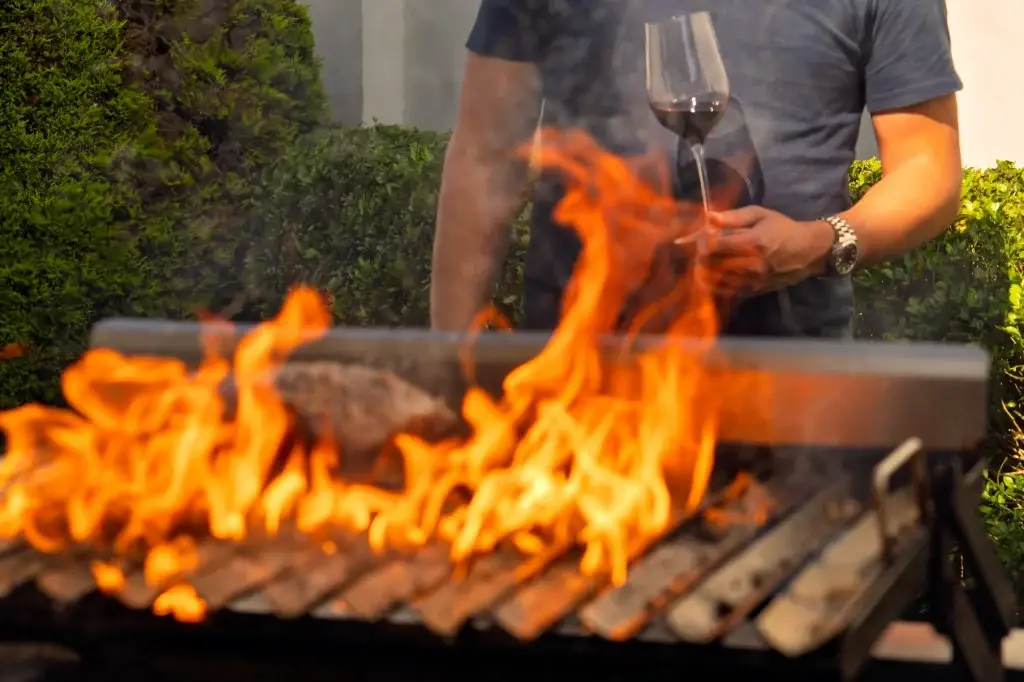
| Prime Grilled Steaks / Ribeye | Cabernet Sauvignon | Firm tannins cut through fat and rich marbling |
| Slow-Cooked Stews & Brisket | Carmenère | Plush tannins meld seamlessly with tender braised textures |
| Aged Cheeses (Parmigiano, Cheddar) | Cabernet Sauvignon | Rich dairy fat and salinity soften bold tannins |
| Dishes with Warm Spices (Paprika, Cumin) | Carmenère | Natural savory spice notes harmonize with culinary seasoning |
| Rich Pasta Bolognese | Carmenère | Moderate tannins avoid clashing with tomato acidity |
Why Many Renowned Chilean Blends Combine Both
Many of Chile’s most prestigious red blends pair Cabernet Sauvignon and Carmenère in varying proportions (often 65-80% Cabernet with Carmenère completing the cuvée). The enological chemistry is brilliant: Cabernet provides back-bone, muscular tannins, and longevity, while Carmenère brings plush mid-palate roundness, velvet texture, and a distinctive spicy charm.