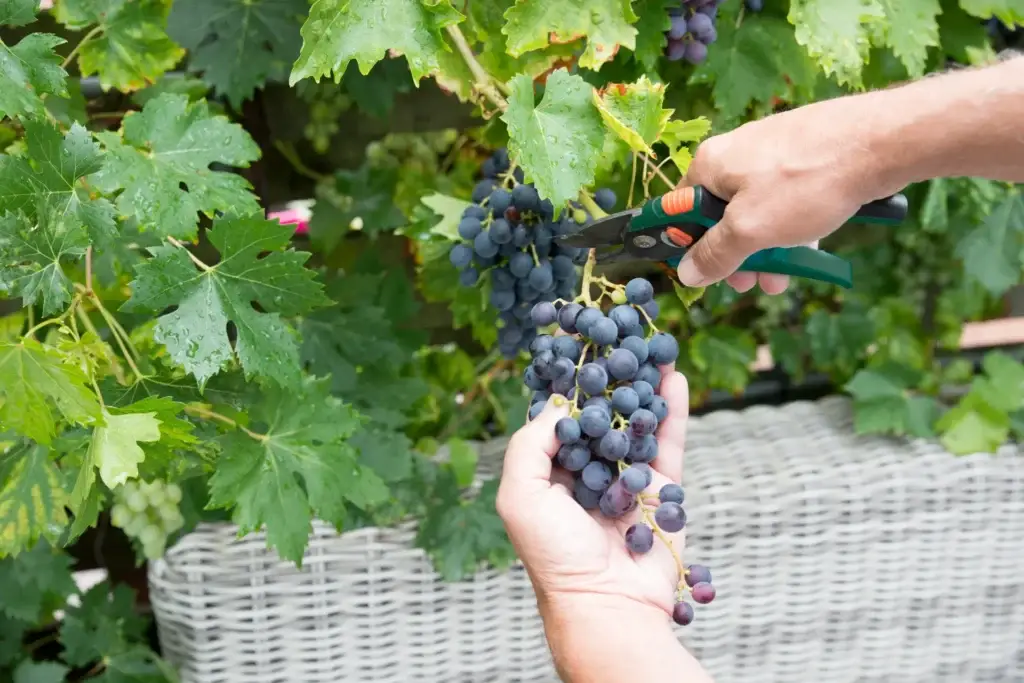
Did you know that one of South America’s most iconic grape varieties was considered extinct by the entire world for more than a century? If you have uncorked a bottle of Chilean red recently, chances are you were holding a true living legend in your glass.
For decades, the global wine community mourned the loss of this noble French grape after a catastrophic pestilence wiped it out. Yet on the other side of the planet, nestled between the towering Andes and the Pacific Ocean, it was thriving in disguise—confusing wine experts and connoisseurs alike. We are talking about Carmenère, the grape that returned from the dead to become Chile’s undisputed national emblem.
In this comprehensive guide, we will explore its astonishing history, learn how to identify its unmistakable aromas, and reveal expert secrets for selecting and pairing the perfect bottle.
Table of Contents
- A French grape that vanished… in France
- The historic mistake that saved it from oblivion
- Why it became Chile’s flagship variety
- How to recognize a fine Carmenère in the glass
- Pairing Carmenère: What works and what to avoid
- Carmenère vs. Merlot: Never confuse them again
- Buyer’s guide: Choosing according to your budget
- Why this living legend belongs in your glass
A French Grape That Vanished… in France
Carmenère originated in the historic vineyards of Bordeaux, France. Historically, it was one of the six original classic varieties permitted in traditional Bordeaux red blends, sharing prominence with globally renowned names like Cabernet Sauvignon, Cabernet Franc, and Merlot.
However, in the mid-19th century, disaster struck Europe’s vineyards. An infestation of a tiny subterranean aphid called phylloxera devastated French vineyards, wiping out millions of vines. When growers replanted their devastated fields, they opted for more resilient, earlier-ripening varieties. Carmenère, requiring long, warm autumns to ripen and prone to coulure (poor fruit set), was abandoned. As the decades slipped by, the wine world officially considered it extinct—relegating it to a historic footnote in viticultural textbooks.
The Historic Mistake That Saved It from Oblivion
What no one in Europe realized was that before phylloxera ravaged France, pre-phylloxera vine cuttings had already sailed across the Atlantic to Chile in the 1850s alongside other noble French varieties. In Chilean soil, these vines grew interplanted without distinction.
For well over a hundred years, Chilean winemakers and viticulturists firmly believed these vines were Merlot. The two varieties share an uncanny physical resemblance in the vineyard: similar leaf contours, almost identical grape clusters, and close harvest timelines.
The mystery was finally solved in 1994. French ampelographer Jean-Michel Boursiquot was inspecting vineyards in the Maipo Valley when he noticed something anomalous: these supposed “Merlot” vines matured on a later cycle, and their young shoot tips revealed a distinct reddish blush. DNA testing proved the impossible: it was Carmenère. The lost treasure of Bordeaux had been secretly tended, vinified, and savored in Chile for over a century by millions of people who had no idea what was truly filling their glasses.
Why It Became Chile’s Flagship Grape
Following this monumental rediscovery, Chilean vintners made a visionary decision. Instead of treating Carmenère as a mere novelty, the nation championed it as its distinctive signature variety. Today, Chile is by an overwhelming margin the world’s premier grower and producer of Carmenère.
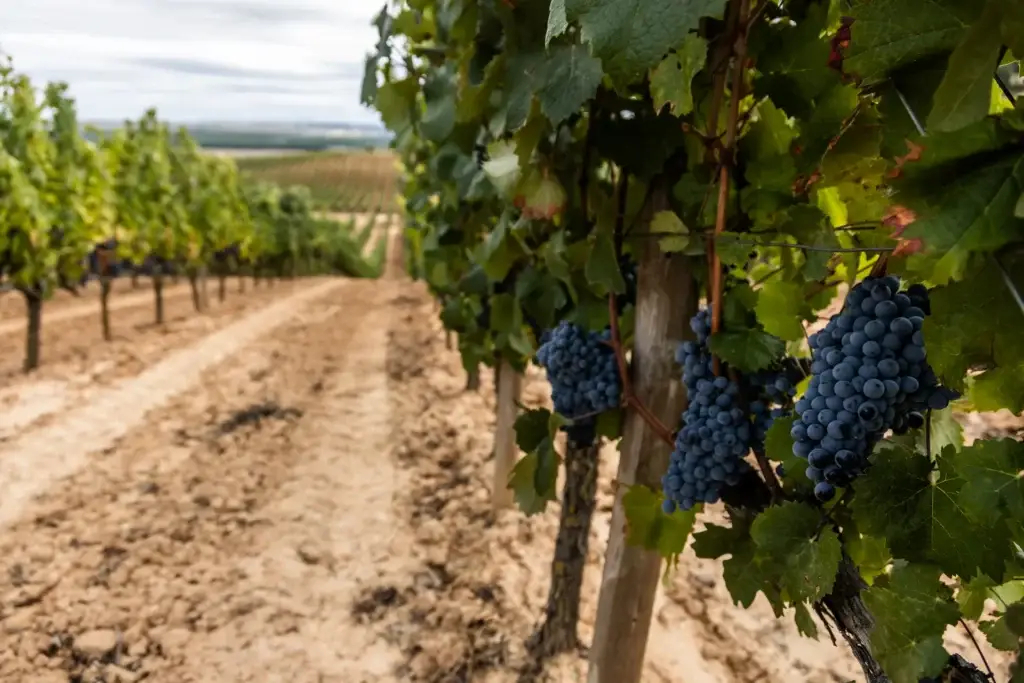
This success is deeply tied to terroir. Chile’s Mediterranean climate provides the exact conditions Carmenère craves to thrive: long, dry, sunny summers and warm autumns that allow slow, complete phenolic ripening. Harvested prematurely, Carmenère exhibits sharp, aggressive green pyrazines (unpleasant raw green bell pepper). But when allowed to mature fully under the Chilean sun, it delivers sumptuous dark fruit, velvety texture, and an exotic spiced perfume.
Where Carmenère Thrives Best in Chile
When selecting a bottle, keep an eye out for these key valleys on the label:
- Colchagua Valley (especially Apalta): The epicenter of world-class Carmenère. Its sheltered microclimate ensures perfect ripening, producing the country’s most awarded icon wines.
- Cachapoal Valley (Peumo): Chile’s best-kept enological secret. Peumo features deep clay-loam soils and gentle breezes from the Cachapoal River that yield remarkably plush, silky Carmenère.
- Maipo Valley: Delivers Carmenère with firmer structure and deeper mineral complexity, ideal for collectors seeking cellar-worthy bottles.
How to Recognize a Fine Carmenère in the Glass
Identifying a Carmenère in a blind tasting is a thrilling experience. Look for these three unmistakable hallmarks:
- Color: Deep, intensely concentrated crimson with vivid violet-purple hues in its youth, evolving toward rich garnet with bottle age.
- Aroma (Nose): An aromatic burst of ripe black cherries, plums, and blackberries. Its signature varietal marker is a lovely note of roasted red bell pepper, cocoa powder, sweet paprika, and, when aged in oak, dark chocolate and pipe tobacco.
- Palate: Medium to full-bodied, characterized by lusciously round, supple tannins (far less astringent than youthful Cabernet Sauvignon). Balanced acidity and a lingering, gently spiced finish.
Ideal Serving Temperature
To enjoy its full expressive spectrum, serve Carmenère at 16°C to 18°C (60°F to 64°F). If served too cold, its lush fruit character is muted and tannins feel rigid. If served too warm, alcohol dominates and throws the wine out of balance.
Pairing Carmenère: What Works and What to Avoid
Thanks to its soft tannins and savory spice notes, Carmenère is exceptionally food-friendly:
Perfect Pairings:
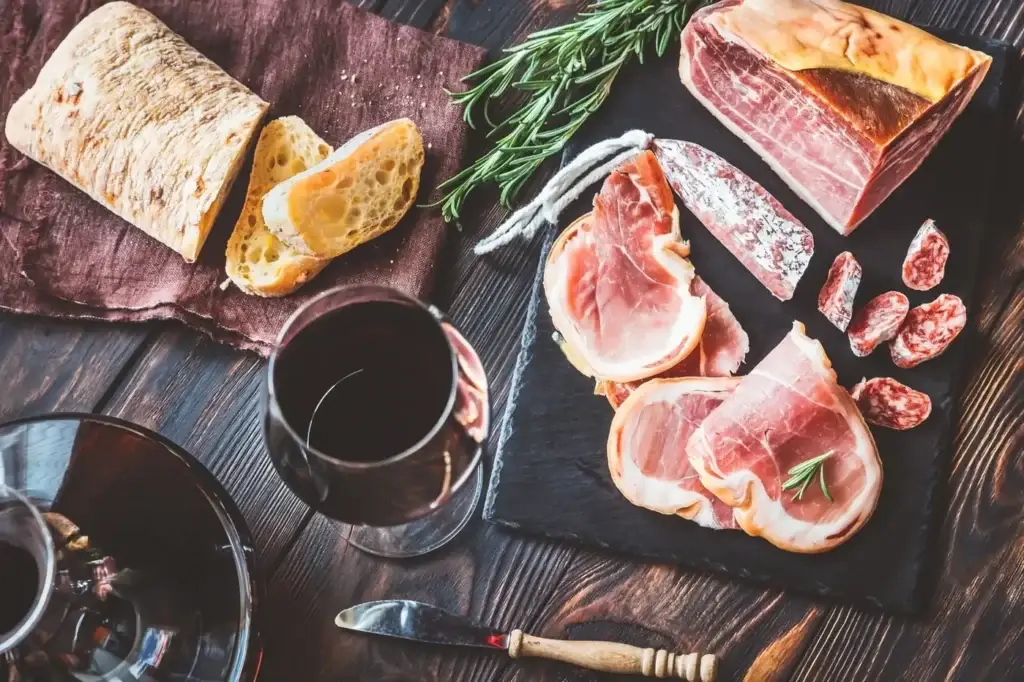
- Grilled & Smoked Red Meats: Barbecued steak, grilled lamb chops, or smoked brisket. The wine’s supple tannins match the richness of the meat, while charcoal smoke echoes the wine’s roasted pepper and spice notes.
- Slow-Cooked Stews: Beef bourguignon, traditional Chilean “pastel de choclo” (corn pie), and hearty bean casseroles.
- Spiced Cuisine: Dishes seasoned with cumin, smoked paprika, rosemary, or mild chili peppers dialogue beautifully with Carmenère’s herbal complexity.
- Semi-Cured Cheeses: Aged Gouda, mature Cheddar, or Manchego complement the wine without overpowering it.
What to Avoid: Delicate white fish, raw shellfish, and acidic ceviches; the red wine’s body will overwhelm subtle seafood, leaving an unpleasant metallic finish.
Carmenère vs. Merlot: Never Confuse Them Again
| Feature | Carmenère | Merlot |
|---|---|---|
| Aromatic Profile | Ripe black fruit, roasted red pepper, sweet spice, cocoa. | Fresh red fruit (cherry, raspberry), plum, subtle violet. |
| Herbal / Savory Note | Distinct and signature (varietal trademark). | Subtle, gentle, or absent. |
| Palate Structure | Medium-plus body, polished velvety tannins, savory finish. | Medium body, exceptionally soft and plush tannins. |
Sommelier Tip: In a blind tasting, look for the aroma of sweet roasted red pepper wrapping around dark plums. If that savory spice is present, you are enjoying a quintessential Carmenère.
Why This Living Legend Belongs in Your Glass
Carmenère is more than just another bottle on a merchant’s shelf. It is living proof that a historical accident spanning over a century can blossom into a country’s greatest viticultural treasure. Every time you pour a glass of Chilean Carmenère, you are toasting with history: the lost grape of France that found its true home at the ends of the Earth.